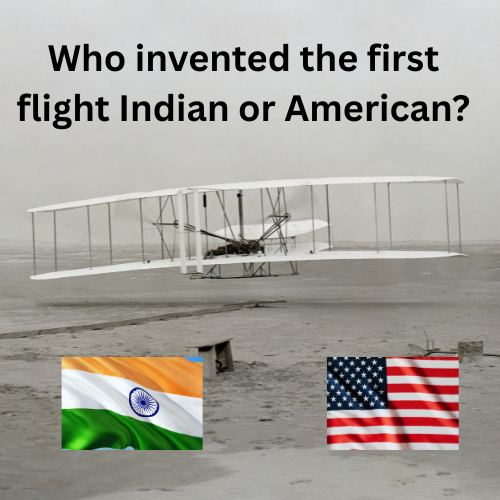
The first flight are made by Indian or Wright Brothers?
Published by: Bhuvan , Published on: 06-03-2026 , LastUpdated On: 06-03-2026
: 83 : 6 : 0
The Indian who made first flight as per history was Shivkar Bhapuji Talpade who lived in Mumbai, India. He have constructed and flown an unmanned airplane at 1500 feet’s for some minutes in 1895. There is not proper evidence and historical records that he made first aircraft and flown unmanned.
Pratap Velkar, a local architect who has researched Talpade's life and written a book about him, denies this, stating that it rose to a small height before crashing. The aircraft has been described as a cylinder of bamboo, with claims it used mercury or urine as a fuel. Some of Talpade's drawings were said to have been sent to Hindustan Aeronautics (HAL), but Anuradha Reddy, a historian of aviation, was unable to trace them. The aircraft itself has been described as being sold to Rallis Brothers, or to HAL. Some accounts of the event stated that the flight was watched by Sayajirao Gaekwad III, then the Maharaja of Baroda, but direct evidence for this is scant. Velkar states that no royals attended, as it was not well-publicized.
Some versions of the story say that Talpade had advice from Subbaraya Shastry (1866 - 1940), who later wrote Vaimānika Shāstra ("Science of Aeronautics"), a text that is frequently associated with descriptions of aircraft in the Vedas. Shastry claimed the text was delivered to him psychically and was thousands of years old. A 1974 paper by scientists from the Indian Institute of Science declared that the designs in the Vaimānika Shāstra itself were technologically unfeasible, stating that the text showed a "complete lack of understanding of the dynamics of the flight of heavier-than-air craft". The study also stated that elements of the text were "entirely modern", and that it was definitively not vedic in origin. Shastry himself in his autobiography states that Talpade attempted to construct models of aircraft under Shastry's guidance but was unsuccessful in making any of them fly.
Can we build flights by using Vedas like Vaimanika Sastra?
Whether flights can be built using the Vedas is a subject of intense debate between traditional belief and modern scientific analysis. While ancient texts, particularly the Vaimānika Śāstra, describe advanced flying machines known as Vimanas, mainstream science and engineering studies have found these descriptions to be aeronautically unfeasible.
- Textual References: The Vedas, Ramayana, and Mahabharata contain descriptions of flying chariots or palaces (Vimanas) used by deities and kings.
- Vaimanika Sastra: A text often attributed to the sage Bharadwaj, it provides detailed descriptions of aircraft, including steering, protection from lightning, and propulsion, such as "mercury vortex engines".
There are some images that available in Vaimanika sastra that refers the flying objects in ancient times.
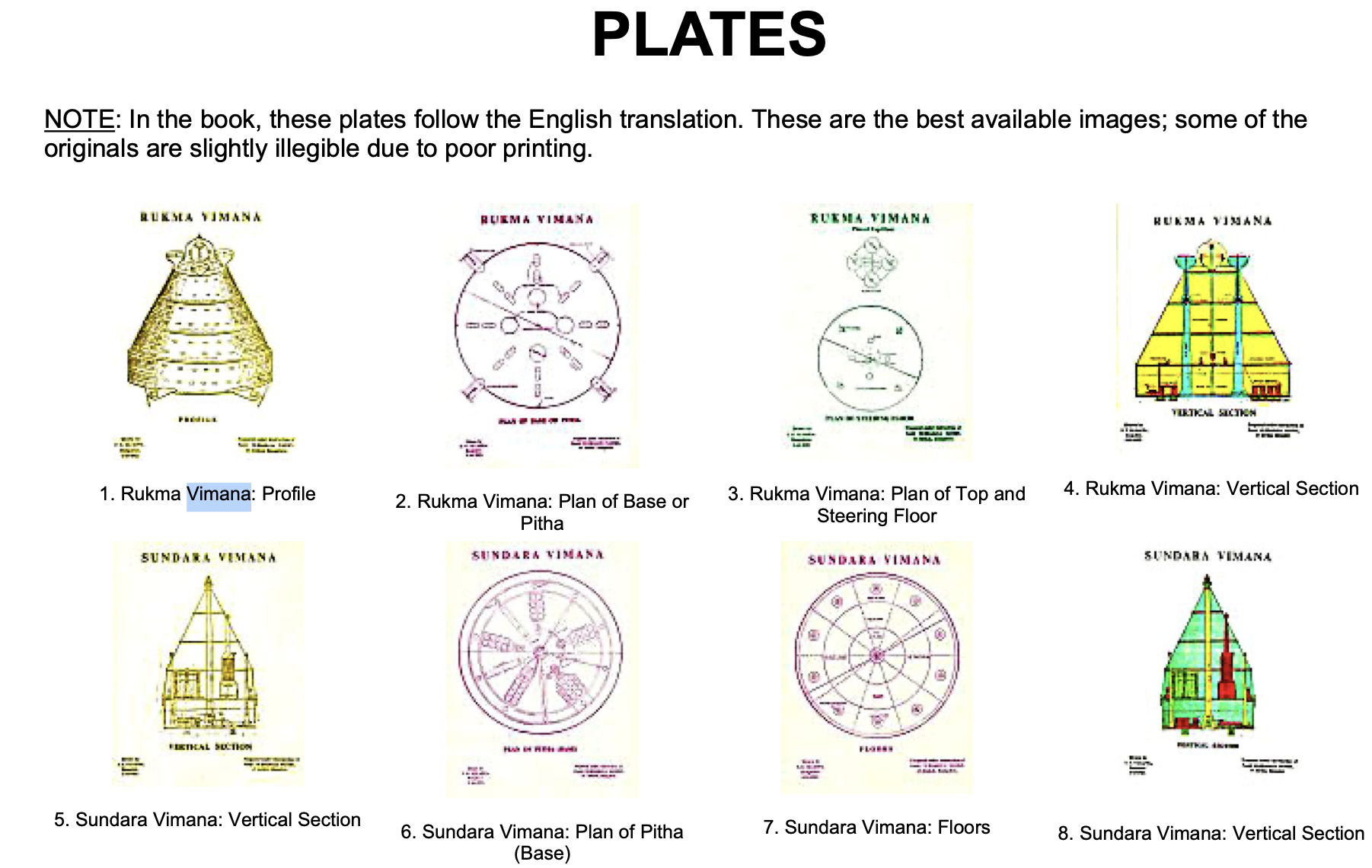
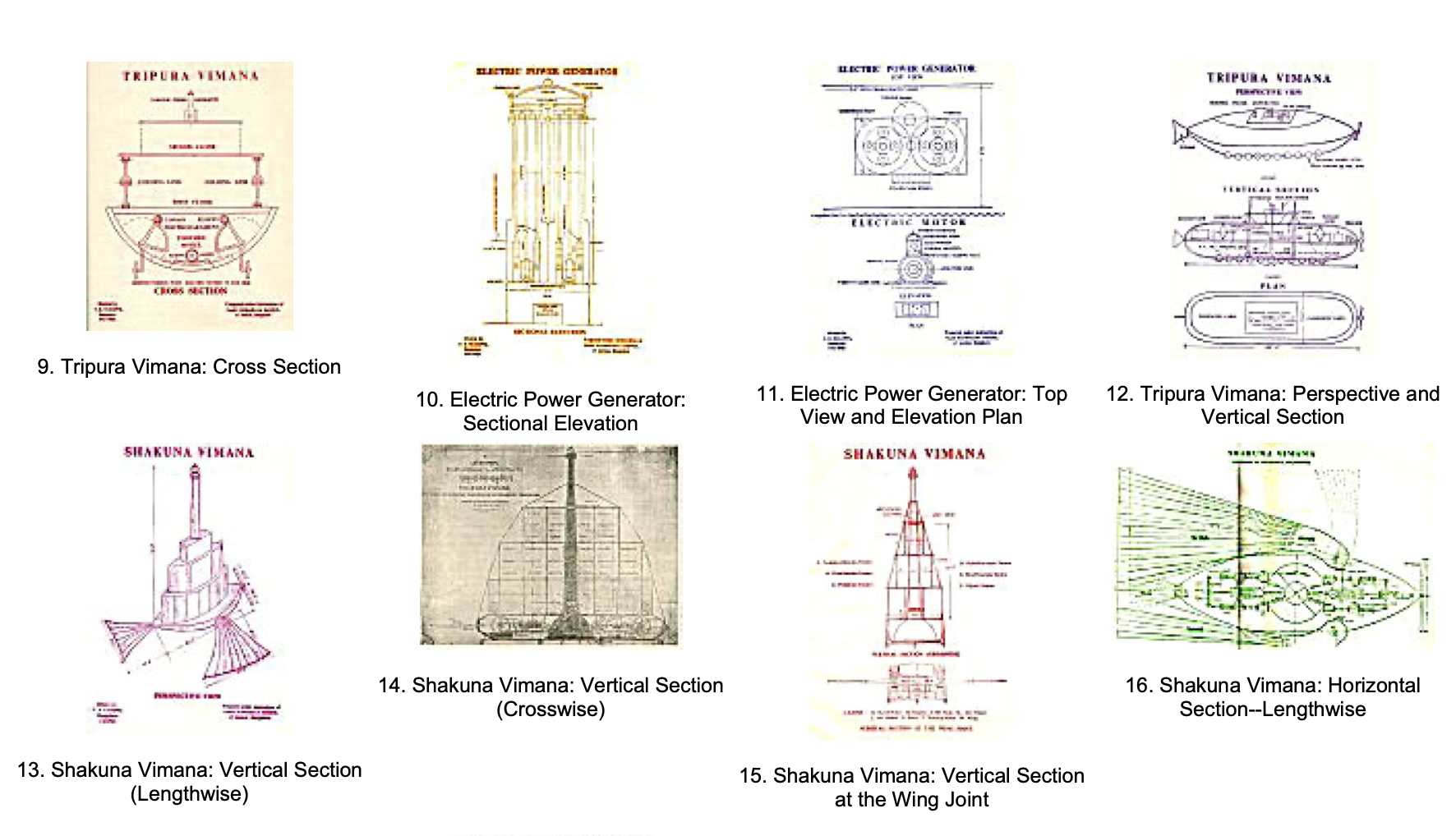
What Vaimanika Sastra is Saying?
Maharshi Bharadwaaja:
I make obeisance to the Divine Being, who is visible on the crest of the Vedas, who is the fountain of eternal bliss, and whose abode is reached by Vimaanas or Aeroplanes. Having studied the Shaastraas or sciences propounded by previous men of science to the best of my ability, for the benefit of mankind, I shall deal with the science of Aeronautics, which is the essence of the Vedas, which will be a source of joy and benefit to humanity, which will facilitate comfortable travel in the sky from world to world, in eight chapters, consisting of 100 topics, in 500 sutras or cryptic pronouncements.
Commentary by Bodhaananda:
I bow to God Mahadeva and His Consort, to Saraswathi Goddess of learning, to Ganapathy guardian of benevolent efforts, and to my venerable preceptor, and I bow to Maharshi Bharadwaaja. In Addition to my own knowledge of Logic, I have five times turned over Vaalmeeki's Mathematics, 'Paribhaashaa Chandrikaa,' and 'Naamaarthhakalpaka,' and aided by their authority, I, Swaamy Bodhaananda, for the easy understanding of the young, have written this 'Bodhananda Vritti,' to elucidate Maharshi Bharadwaaja's concisely worded text on Aeronautics.
At the outset Maharshi Bharadwaaja invokes God in the traditional manner for the successful commencement, progress, and completion of his great literary work. Attaining mastery over the Vedas by Divine Grace, and studying the works of earlier Aachaaryaas or preceptors, he has churned the Vedic lore, and extracting the, cream, presented it to mankind for reaping untold benefits, in the work named 'Yantrasarvasva.' In the fortieth chapter therein he deals with the science of Aeronautics, explaining the construction and use of many kinds of aeroplanes, in 8 chapters, containing 100 subject heads, comprising 500 sutras or oracular pronouncements. In the first stanza the reference is to the teaching of the sacred works, "Uttara-taapaneeya," 'Shaibya-prasna,' 'Kaataka,' and 'Maandookya,' that the symbolic letter, 'Om,' leads to the knowledge of God and Salvation. Bharadwaaja implies that the Vimaana or aeroplane constructed according to Vymaanika Shaastra, may enable men to reach God, and enjoy the benefits of His Divine abode. The previous Aachaaryaas Bharadwaaja refers to are named by Vishwanaatha as,--Naaraayana, Shownaka, Garga, Vaachaspathi, Chaakraayani and Dhundinaatha, venerable authors of "Vimaana-Chandrikaa", "Vyomayaana-Tantra," "Yantra-Kalpa", "Yaana-Bindu," "Kheta-yaana Pradeepikaa," and "Vyomayaana-Arkaprakaasha," respectively.
Bharadwaaja thus defines the word Vimaana:
Vega-Saamyaat Vimaano Andajaanaam. Sootra 1.
"Owing to similarity of speed with birds, it is named Vimaana."
Bodhaananda Vritti:
The word "andaja" means "egg-born", and includes eagles and other birds which fly by their own volition. The Vimaana is a vehicle which flies in the sky with speed comparable with birds. Lallachaarya says, "That which can fly in the sky with speed equal to that of birds, is called Vimaana." Aachaarya Naaraayana says, "That which can speed on earth, on water, through air, by its own power, like a bird, is a "Vimaana." Shankha says, "Experts in the science of aeronautics say, "That which can fly through air from one place to another is a Vimaana" And Vishwambhara says, "Experts say that that which can fly through air from one country to another country, from one island to another island, and from one world to another world, is a "Vimaana". Having thus defined the name of the Vimaana, the sage proceeds to describe its details.
Rahasyagnyodhikaaree. Sootra 2.
"The pilot is one who knows the secrets."
Bodhaananda: Scientists say that there are 32 secrets of the working of the Vimaana. A pilot should acquaint himself thoroughly with them before he can be deemed competent to handle the aeroplane. He must know the structure of the aeroplane, know the means of its take off and ascent to the sky, know how to drive it and how to halt it when necessary, how to manoeuvre it and make it perform spectacular feats in the sky without crashing. Those secrets are given in "Rahasya-Lahari" and other works, by Lalla and other masters, and are described thus: "The pilot should have had training in maantrica and taantrica, kritaka and antaraalaka, goodha or hidden, drishya and adrishya or seen and unseen, paroksha and aparoksha, contraction and expansion, changing shape, look frightening, look pleasing, become luminous or enveloped in darkness, deluge or pralaya, vimukha, taara, stun by thunderous din, jump, move zig-zag like serpent, chaapala, face all sides, hear distant sounds, take pictures, know enemy manoeuvres, know direction of enemy approach, stabdhaka or paralyse, and karshana or exercise magnetic pull.
These 32 secrets the pilot should learn from competent preceptors, and only such a person is fit to be entrusted with an aeroplane, and not others.
They are explained thus by Siddhanaatha:
1. Maantrika; As prescribed in "Mantraadhikaara," by invoking the mantras of Chhinnamasta, Bhairavee, Veginee, Siddhaamba, acquire the powers of ghutikaa, paadukaa, visible and invisible and other mantraas with potent herbs and efficacious oils, and Bhuvaneswaree Mantra which confers spiritual and mesmeric powers, to construct aeroplanes, which don't break cannot be cut, cannot be burnt, and cannot be destroyed.
2. Taantrika: By acquiring Mahaamaaya, Shambara, and other taantric powers, to endow the plane with those powers.
3. Kritaka: By study of architects like Vishwakarma, Chhaayaaparusha, Mann, Maya and others,to construct aeroplanes of various patterns.
4. Antaraala: In the wind-swept atmospheric region of the sky, in the clash at the borders of mighty currents, an inadvertent plane is likely to be smashed to pieces. But by getting warned of the approach of such danger spots, the plane could be halted and steered with care.
5. Goodha: As explained in 'Vaayutatva-Prakarana', by harnessing the powers, Yaasaa, Viyaasaa, Prayaasaa in the 8th atmospheric layer covering the earth, to attract the dark content of the solar ray, and use it to hide the Vimaana from the enemy.
6. Drishya: By collision of the electric power and wind power in the atmosphere, a glow is created, whose reflection is to be caught in the Vishwa-Kriyaa-darapana or mirror at the front of the Vimana, and by its manipulation produce a Maaya-Vimaana or camouflaged Vimana.
7. Adrishya: According to "Shaktitantra", by means of the Vynarathya Vikarana and other powers in the heart centre of the solar mass, attract the force of the ethereal flow in the sky, and mingle it with the balaahaavikarana shakti in the aerial globe, producing thereby a white cover, which will make the Vimana invisible.
8. Paroksha: According to "Meghotpatthi-prakarana," or the science of the birth of clouds, by entering the second of the summer cloud layers, and attracting the power therein with the shaktyaakarshana darpana or force-attraction mirror in the Vimana, and applying it to the parivesha or halo of the Vimaana, a paralysing force is generated, and opposing Vimaanas are paralysed and put out of action.
9. Aparoksha: According to 'Shakti-tantra,' by projection of the Rohinee beam of light, things in front of the Vimaana are made visible.
10. Sankocha, or Contraction: As prescribed in the Yantraangopasamhaara section, when the Vimaana is flying at speed with fully extended wings, and there is danger ahead, turning the 7th switch in the Vimana, its parts can be made to contract.
11. Vistrita: According to 'Akaashatantra', when the Vimana is in the central air flood in the third and first regions of the sky, by turning the switch in the 11th section of plane, it becomes expanded suitably according to "Vaalmeeki Ganita."
12. Viroopa Karana: As stated in "Dhooma Prakarana", by producing the 32nd kind of smoke through the mechanism, and charging it with the light of the heat waves in the sky, and projecting it through the padmaka chakra tube to the bhyravee oil-smeared Vyroopya-darpana at the top of the Vimaana, and whirling with 132nd type of speed, a very fierce and terrifying shape of the Vimana will emerge, causing utter fright to onlookers.
13. Roopaantara: As stated in "Tylaprakarana," by preparing griddhrajihwaa, kumbhinee, and kaakajangha oils and anointing the distorting mirror in the Vimaana with them, applying to it the 19th kind of smoker and charging with the kuntinee shakti in the Vimana, shapes like lion, tiger, rhinoceros, serpent, mountain, river will appear and amaze observers and confuse them.
14. Suroopa: By attracting the 13 kinds of Karaka force mentioned in "Karaka prakarana" applying snow-surcharged air and projecting it through the air conveying tube to the pushpinee- pinjula mirrors in the front right side of the Vimana, and focusing on it the suragha beam, a heavenly damsel bedecked with flowers and jewels will appear to onlookers of the Vimana.
15. Jyotirbhaava: As stated in "Amshubodhinee," out of Samgnaana and other 16 digits of the solar glow, by attracting the 12th to the 16th digits and focusing them on the air force in the Mayookha section in the fourth pathway in the sky, and similarly by attracting the force of the etherial glow and mingling it with the glow in the 7th layer of air mass, and then by projecting both these forces through the 5 tubes in the Vimana on to the section of the guhaa-garbha mirror, a rich glow like the morning glow of the sun will be produced.
16. Tamomaya: As described in "Darpana Prakarana," by means of the dark force mirror, capture the force of darkness, pass it through the Thamo-Yantra in the north-west side of the Vimana, and by turning a switch produce at noon-day the utter darkness of the night of the new-moon.
17. Pralaya: As described in the magic book of destruction, attract the 5 kinds of smoke throughthe tube of the contracting machine in the front part of the Vimana, and merge it in the cloud- smoke mentioned in "Shadgarbha Viveka", and pushing it by electric force through the five-limbed aerial tube, destroy everything as in a cataclysm.
18. Vimukha: As mentioned in "Rig-hridaya", by projecting the force of Kubera, Vimukha and Vyshawaanara poison powder through the third tube of the roudree mirror and turning the switch of the air mechanism, produce wholesale insensibility and coma.
19. Taara: By mixing with etherial force 10 parts of air forte, 7 parts of water force, and 16 parts of solar glow, and projecting it by means of the star-faced mirror through the frontal tube of the Vimana; the appearance of a star-spangled sky is created.
20. Mahaashabda Vimohana: By concentrating the air force in the seven tubes of the Vimana,and turning the switch, produce, as stated in "Shabda prakaashikaa" a crescendo of thunderous din, which stuns people, and makes them quake with fear and become insensible.
21. Langhana: As stated in "Vaayu tattva prakarana" When crossing from one air stream into another, the Vimana faces the baadaba glow of the sun and catches fire. In order to prevent that, the electric force and air force in the Vimana should be conjoined and centred in the life-centre of the Vimana, and by turning the switch, the Vimana will leap into safety.
22. Saarpa-Gamana: By attracting the dandavaktra and other seven forces of air, and joining with solar rays, passing it through the zig-zagging centre of the Vimana, and turning the switch, the Vimana will have a zig-zagging motion like a serpent.
23. Chaapala: On sighting an enemy plane, by turning the switch in the force centre in the middle section of the Vimana, a 4087 revolutions an hour atmospheric wave speed will be generated, and shake up the enemy plane.
24. Sarvatomukha: When a formation of enemy planes comes to attack one's Vimana, by turning the switch at the crown of the Vimana, make it revolve with agility and face all sides.
25. Parashabda Graahaka: As explained in "Sowdaaminee kalaa" or science of electronics, by means of the sound capturing yantra in the Vimana, to hear the talks and sounds in enemy planes flying in the sky.
26. Roopaakarshana: By means of the photographic yantra in the Vimana to obtain a television view of things inside an enemy plane.
27. Kriyaagrahana: By turning the key at the bottom of the Vimana, a white cloth is made to appear. By electrifying the three acids in the north-east part of the Vimana, and subjecting them to the 7 kinds of solar rays, and passing the resultant force into the tube of the Thrisheersha mirrorand making the cloth screen face the mirror, and switching on the upper key, all the activities going on down below on the ground, will be projected on the screen.
28. Dikpradarshana: Turning the key at the front of the Vimana the dishaampati yantra will show the direction from which the enemy plane is approaching.
29. Aakaashaakaara: According to "Aakaasha-tantra", by mixing black mica solution with neemand bhoonaaga decoctions and smearing the solution on the outer body of the Vimana made of mica plates, and exposing to solar rays, the plane will look like the sky and become indistinguishable.
30. Jalada roopa: Mixing pomegranate juice, bilva or bael oil, copper-salt, kitchen smoke, granthika or gugul liquid, mustard powder, and fish scale decoctions, and adding sea-shell and rock-salt powder, and collecting smoke of the same solution and spreading it with solar heat enveloping the cover, the Vimana will have the appearance of a cloud.
31. Stabdhaka: By projecting apasmaara poison-fume smoke through the tube on the north side on the Vimana, and discharging it with stambhana-yantra, people in enemy planes will be made unconscious.
32. Karshana: When enemy planes come in strength to destroy one's Vimana, by setting aflame the Jwaalinee shakit in the Vyshwaanara-naala or pipe located at the navel of the plane, and switching the keys of the two wheels to 87 degrees of heat, the burning shakti will envelope the enemy plane and destroy it.
These are the 32 rahasyaas or secrets which should be known by pilots according to Siddhanaatha.
"Maargaadhikaranam " Aerial Routes:
Panchagnyascha. Sootra 3.
"The pilot should know five things."
Bodhaananda Vritti:
As the secrets of aeronautics are indicated in the second sutra, the five atmospheric regions arereferred to in the third sutra. According to Shownaka, the regions of the sky are five, named, Rekhaapathha, Mandala, Kakshya, Shakti, and Kendra. In these 5 atmospheric regions, there are 5,19,800 air ways traversed by Vimanas of the Seven Lokas or worlds, known as Bhooloka, Bhuvarloka, Suvarloka, Maholoka, Janoloka, Tapoloka and Satyaloka.
Dhundinaatha and "Vaalmeeki Ganita" state that Rekha has 7,03,00,800 air routes, Mandala has 20,08,00200 air routes, Kakshya has 2,09,00,300 air routes, Shakti has 10,01,300 air routes, and Kendra has 30,08,200 air routes.According to "Vaalmeeki Ganita" in the Rekhaapathha region, sections 1 to 4 are suitable for the passage of the Vimanas of this Bhooloka. In the Mandala region sections 3 to 5 are suitable for Vimanas of Bhuvarloka, Suvarloka, and Maholoka dwellers. For the Janoloka Vimanas sections 2 to 5 in the Kakshya region are suitable. Section 1 to 6 in the Shakti region are suitable for the Vimanas of Tapoloka. For the dwellers of Bramhaloka sections 3 to 11 in the Kendra region are suitable, according to shaastras like "Vaalmeeki Ganita" and others.
There are lot things to know about vaimanika sastra. To know more you can visit below site. Click here to now more
What about Wright Brothers ?
The Wright brothers, Orville Wright (August 19, 1871 – January 30, 1948) and Wilbur Wright (April 16, 1867 – May 30, 1912), were American aviation pioneers generally credited with inventing, building, and flying the world's first successful airplane. They made the first controlled, sustained flight of an engine-powered, heavier-than-air aircraft with the Wright Flyer on December 17, 1903, four miles (6 km) south of Kitty Hawk, North Carolina, at what is now known as Kill Devil Hills. In 1904 the Wright brothers developed the Wright Flyer II, which made longer-duration flights including the first circle, followed in 1905 by the first truly practical fixed-wing aircraft, the Wright Flyer III.
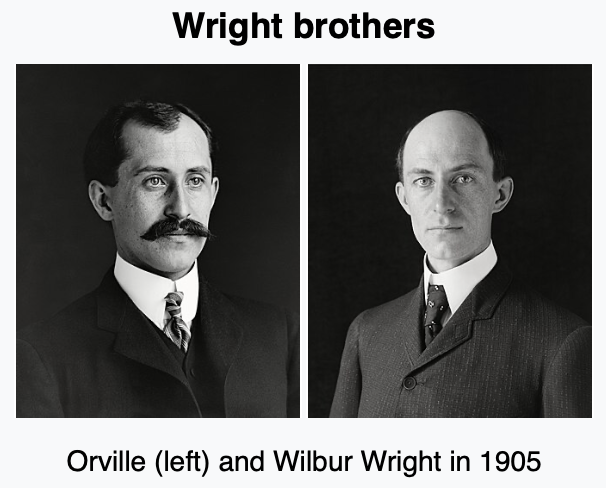
The brothers' breakthrough invention was their creation of a three-axis control system, which enabled the pilot to steer the aircraft effectively and to maintain its equilibrium. Their system of aircraft controls made fixed-wing powered flight possible and remains standard on airplanes of all kinds. Their first U.S. patent, written in March 1903, before their first flight at Kitty Hawk, did not claim invention of a flying machine, but rather a system of aerodynamic control that manipulated a flying machine's surfaces. From the beginning of their aeronautical work, Wilbur and Orville focused on developing a reliable method of pilot control as the key to solving "the flying problem". This approach differed significantly from other experimenters of the time who put more emphasis on developing powerful engines. Using a small home-built wind tunnel, the Wrights also collected more accurate data than any before, enabling them to design more efficient wings and propellers.
The brothers gained the mechanical skills essential to their success by working for years in their Dayton, Ohio-based shop with printing presses, bicycles, motors, and other machinery. Their work with bicycles, in particular, influenced their belief that an unstable vehicle such as a flying machine could be controlled and balanced with practice. This was a trend, as many other aviation pioneers were also dedicated cyclists and involved in the bicycle business in various ways. From 1900 until their first powered flights in late 1903, the brothers conducted extensive glider tests that also developed their skills as pilots. Their shop mechanic Charles Taylor became an important part of the team, building their first airplane engine in close collaboration with the brothers.
The Wright brothers' status as inventors of the airplane has been subject to numerous counter-claims. Much controversy persists over the many competing claims of early aviators. Edward Roach, historian for the Dayton Aviation Heritage National Historical Park, argues that the Wrights were excellent self-taught engineers who could run a small company well, but did not have the business skills or temperament necessary to dominate the rapidly growing aviation industry at the time.
First Idea on flights:
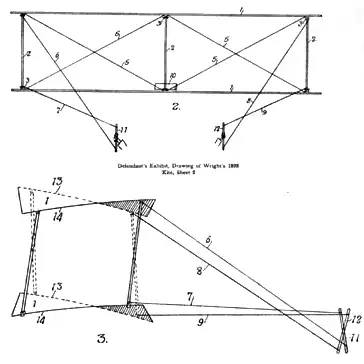
Despite Lilienthal's fate, the brothers favored his strategy: to practice gliding in order to master the art of control before attempting motor-driven flight. The death of British aeronaut Percy Pilcher in another hang gliding crash in October 1899 only reinforced their opinion that a reliable method of pilot control was the key to successful – and safe – flight. At the outset of their experiments they regarded control as the unsolved third part of "the flying problem". The other two parts – wings and engines – they believed were already sufficiently promising.
The Wright brothers' plan thus differed sharply from more experienced practitioners of the day, notably Ader, Maxim, and Langley, who all built powerful engines, attached them to airframes equipped with untested control devices, and expected to take to the air with no previous flying experience. Although agreeing with Lilienthal's idea of practice, the Wrights saw that his method of balance and control by shifting his body weight was inadequate. They were determined to find something better.
On the basis of observation, Wilbur concluded that birds changed the angle of the ends of their wings to make their bodies roll right or left. The brothers decided this would also be a good way for a flying machine to turn – to "bank" or "lean" into the turn just like a bird – and just like a person riding a bicycle, an experience with which they were thoroughly familiar. What is equally important, they hoped this method would enable recovery when the wind tilted the machine to one side (lateral balance). They puzzled over how to achieve the same effect with man-made wings and eventually discovered wing-warping when Wilbur idly twisted a long inner-tube box at the bicycle shop.
Other aeronautical investigators regarded flight as if it were not so different from surface locomotion, except the surface would be elevated. They thought in terms of a ship's rudder for steering, while the flying machine remained essentially level in the air, as did a train or an automobile or a ship at the surface. The idea of deliberately leaning, or rolling, to one side either seemed undesirable or did not enter their thinking. Some of these other investigators, including Langley and Chanute, sought the elusive ideal of "inherent stability", believing the pilot of a flying machine would not be able to react quickly enough to wind disturbances to use mechanical controls effectively. The Wright brothers, in contrast, wanted the pilot to have absolute control. For that reason, their early designs made no concessions toward built-in stability (such as dihedral wings). They deliberately designed their 1903 first powered flyer with anhedral (drooping) wings, which are inherently unstable, but less susceptible to upset by gusty cross winds.
The first flying flight by Wright Brothers :
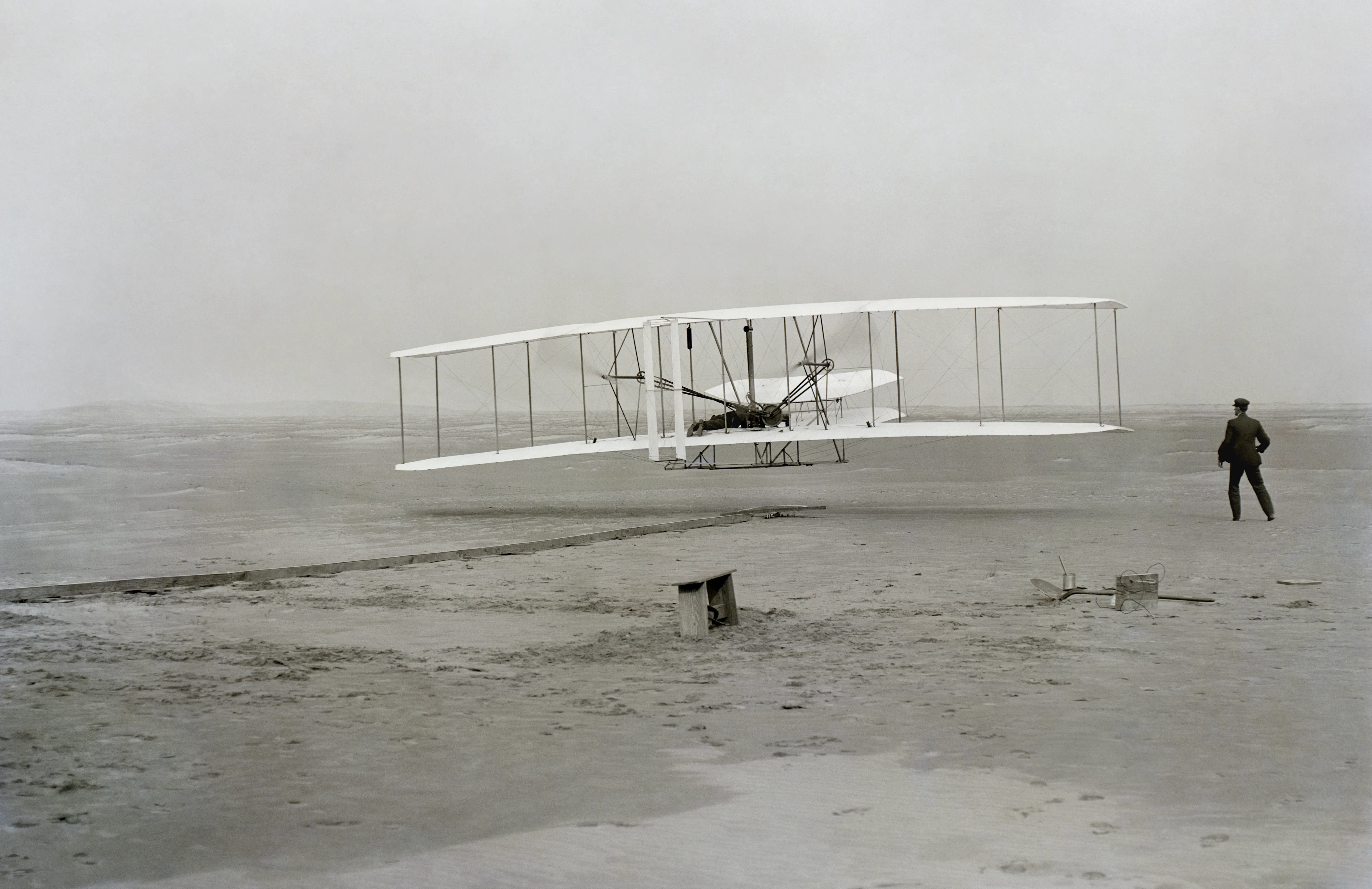
The Wright Flyer (also known as the Kitty Hawk, Flyer I or the 1903 Flyer) made the first sustained flight by a manned heavier-than-air powered and controlled aircraft on December 17, 1903.[1] Invented and flown by brothers Orville and Wilbur Wright, it marked the beginning of the pioneer era of aviation.
The aircraft is a single-place biplane design with anhedral (drooping) wings, front double elevator (a canard) and rear double rudder. It used a 12 horsepower (9 kilowatts) gasoline
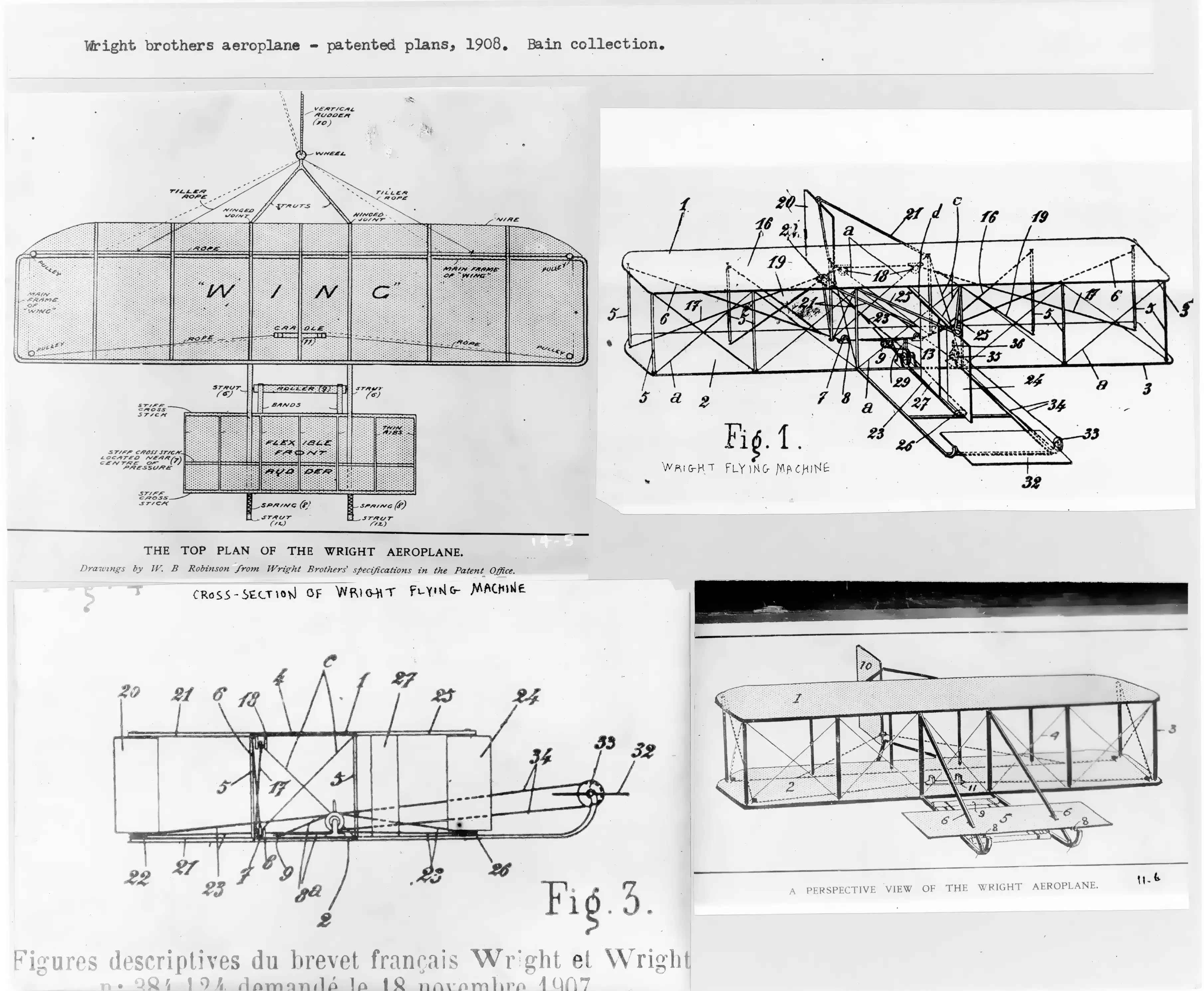
engine powering two pusher propellers. Employing "wing warping", it was relatively unstable and very difficult to fly.
The Wright brothers flew it four times in a location now part of the town of Kill Devil Hills, about 4 miles (6 kilometers) south of Kitty Hawk, North Carolina. The airplane flew 852 ft (260 m) on its fourth and final flight, but was damaged on landing, and wrecked minutes later when powerful gusts blew it over.
The brothers shipped the wreckage back to Dayton, and the aircraft never flew again. Orville later restored it and displayed it on several occasions. The Flyer joined the Smithsonian Institution's collection of historic aircraft in 1948 after the end of a long and bitter dispute between Orville and the Institution over its refusal to recognize the Flyer as the first successful airplane. Today, it is on display in a place of honor in the National Air and Space Museum in Washington, D.C.
: 6 : 0